
HUMAT syllabus and official documents
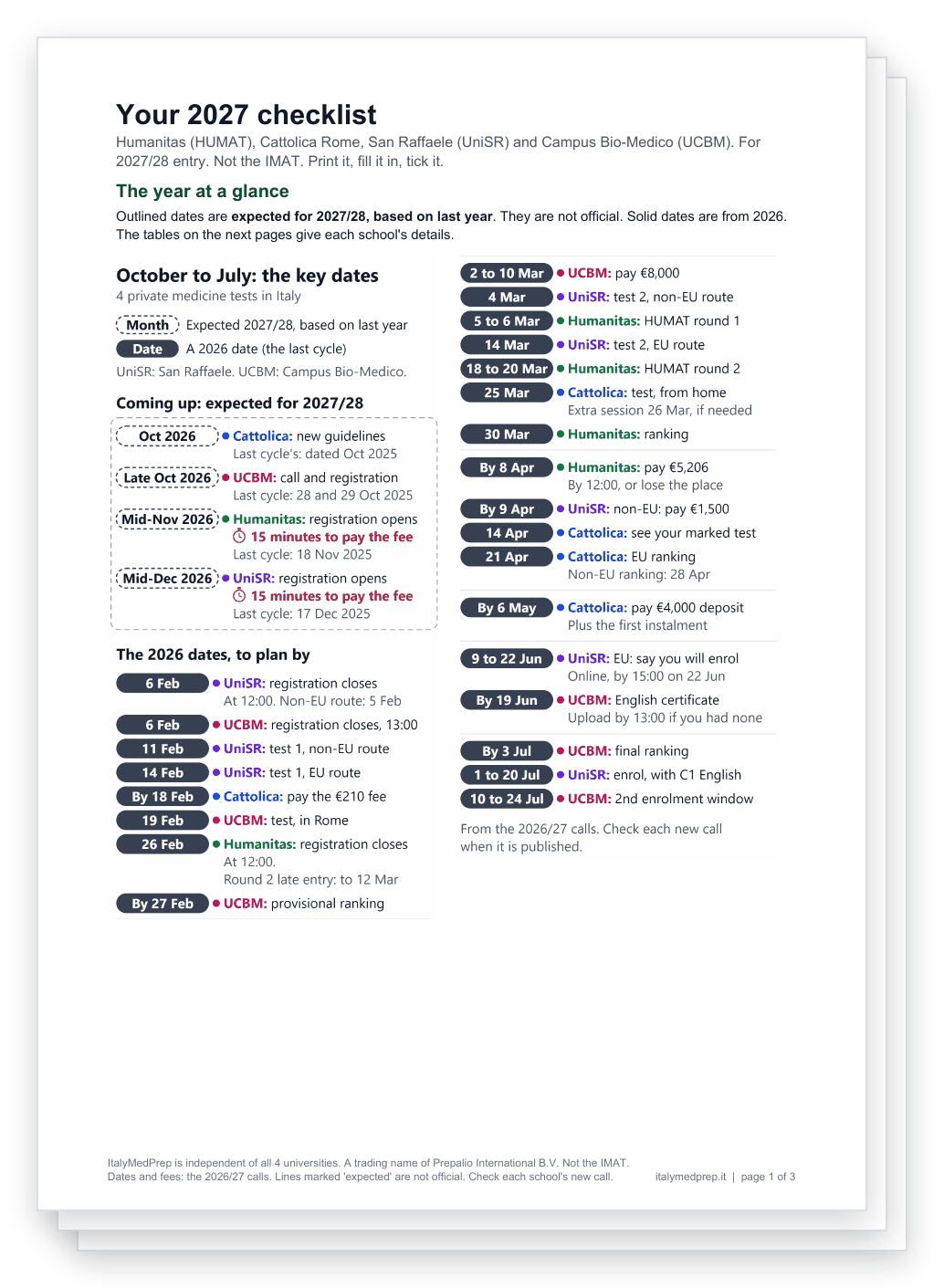
Free: a printable 2027 checklist for all 4 schools.
Get the free checklistIn short. Looking for HUMAT past papers? Read this first. Humanitas titled its 2026 syllabus "Syllabi for the new test". So papers and books from before 2026 may describe an older test. For the new test, Humanitas published a call, a syllabus, scoring sheets and a technical guide. None of these is a full past paper. This guide explains each one, then the syllabus in plain words.
What Humanitas publishes for the new test
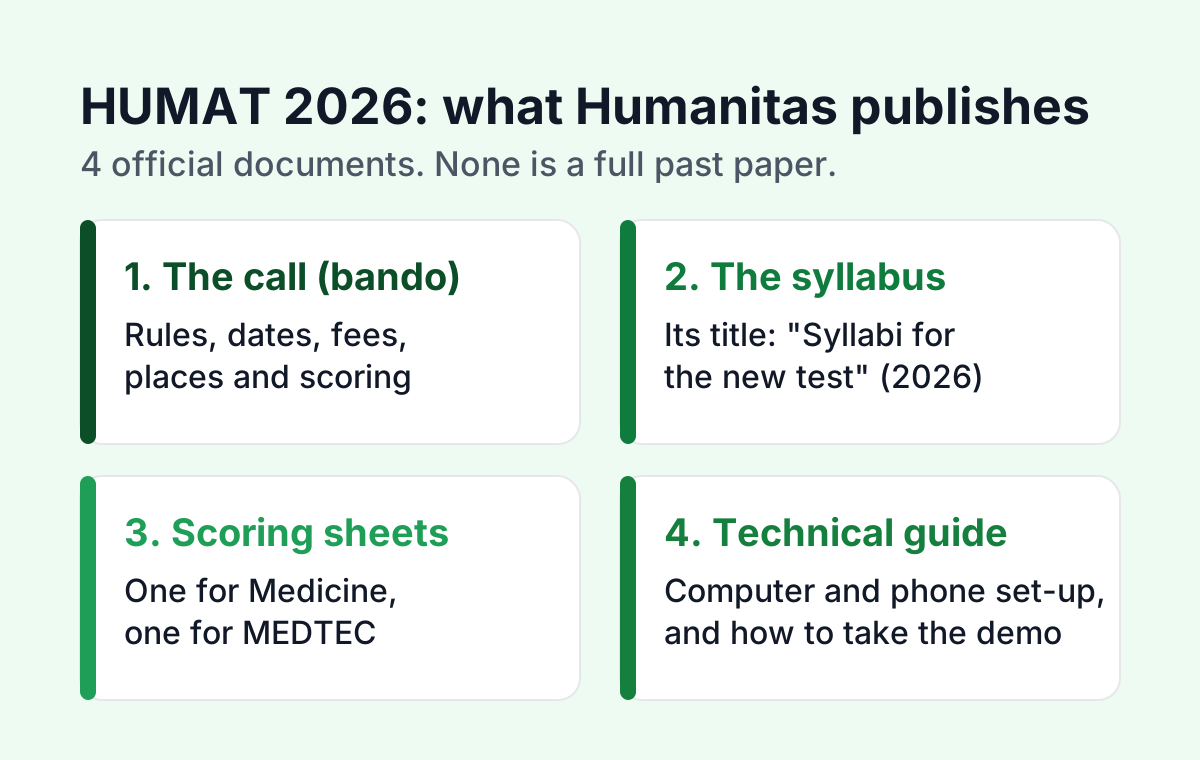
For the 2026/27 cycle, Humanitas University published these documents:
- The call (bando). The official rules: dates, fee, places, scoring and deadlines. There is one call for EU applicants and one for non-EU applicants.
- The syllabus. Its title is "Syllabi for the new test". It is dated March 2026 and covers the new format. Until Humanitas publishes a 2027/28 syllabus, this is the one to use. It lists what each part of the test covers.
- The scoring sheets. One for Medicine and one for MEDTEC (a medicine course Humanitas runs with Politecnico di Milano). They give the points for a right, wrong or blank answer.
- The technical guide. It explains how to set up your computer and phone. It also explains how to take the demo test.
The demo is a technical check. The guide says to use it to test your internet connection, your computer and your phone. You also install the exam software through it.
After each round, you can see your own test through a link in the registration portal.
So start with these documents. They describe the test you will actually take.
The 2026 test in one picture
The HUMAT has 60 questions in 120 minutes. It is fully in English, and you take it from home. The 120 minutes are split into 3 parts, each with its own clock. Each part has 20 questions. These are the Medicine points:
- Part 1, reasoning and reading (Scientific Thinking and Academic Literacy): 45 minutes. 22 points a question. You need 88 of 440.
- Part 2, biology and chemistry: 35 minutes. 16 points a question. You need 64 of 320.
- Part 3, maths and physics: 40 minutes. 10 points a question. You need 40 of 200.
Applying to MEDTEC? It uses the same test, but turns the points round. A Part 3 question earns 22 points, and a Part 1 question 10. You need 88 in Part 3 and 40 in Part 1.
The scoring rules:
- A wrong answer loses a quarter of its points: 5.5, 4 or 2.5 for Medicine. A blank scores 0.
- So guessing at random does not raise your score on average. Guess when you can rule out an option.
- To be ranked, you need 192 of 960 and the minimum in every part.
- There are 2 rounds in March. Your better score counts.
- One €200 fee covers both rounds.
There are also 6 reserve questions, one per subject. You answer them at the end, in 12 extra minutes. They count only if a main question is cancelled because of an error.
Our HUMAT practice goes one timed part at a time, and has no Academic Literacy questions: see what Single-School Prep includes, and when access opens.
The syllabus in plain words
Part 1: reasoning and reading
Scientific Thinking tests skills, not facts you learn by heart. The syllabus names 3 kinds of thinking:
- Mathematical: reading graphs, working with formulas, simultaneous equations and orders of magnitude.
- Procedural: following steps and flowcharts, sets, choosing the data that matters, and comparing theory with data.
- Visual: shapes in 3D, mirror images, patterns and careful observation.
Academic Literacy is reading. You get science texts of about 700 words, adapted from real ones. They are at C1 English level or above. The questions test quick reading, careful reading, critical thinking, and what words and sentences mean.
Part 2: biology and chemistry
Each subject has 5 blocks.
- Biology: the chemistry of living things, the cell, and energy in cells. Then inheritance and genetics. Then evolution, anatomy and physiology.
- Chemistry: matter and the periodic table, chemical bonds, and reactions. Then equilibria, acids, bases and redox. Then the basics of organic chemistry.
Part 3: maths and physics
Each subject has 5 blocks.
- Maths: algebra and logarithms, functions, geometry and trigonometry, formal logic, then probability, statistics and combinatorics.
- Physics: measures and motion, dynamics, fluids and optics, thermodynamics, then electricity and magnetism.
Two details are easy to miss. Formal logic sits inside maths: truth tables, rules of inference and proof by contradiction. And physics includes optics: lenses, Snell's law, interference and diffraction.
How to use older books and PDFs
- Science practice only. Check each topic against the 2026 syllabus first.
- Never for the format or the scoring. Use the 2026 call and scoring sheets for those.
- Each part on its own clock, with no calculator. That is how the 2026 test ran.
Set up your computer and phone
You take the HUMAT from home, so your set-up matters.
- A computer with a webcam and microphone, running Safe Exam Browser.
- A phone or tablet running Zoom, so the supervisors can see you.
- You cannot take the test on a phone or tablet. Two screens are not allowed.
In 2026, the demo was open twice: from 16 February to 4 March, and from 9 to 17 March. Do it early, so problems show up before test day.
Who can take it, and when
- Students in their final school year, and students who already have their diploma, can take it.
- Students in their second-to-last school year can take it too. The score then counts only for the following year's entry.
- In the 2026/27 call, you needed B2 English to enrol. Passing the HUMAT counted as your proof, so you needed no certificate.
The 2027/28 call is not published yet. In 2026/27, registration opened on 18 November 2025. Both rounds ran in March 2026. Based on that, expect registration from mid-November 2026 and both rounds in March 2027.
Your next step
Read the official syllabus once, with this page beside it. Then plan your weeks part by part. For Medicine, Part 1 carries the most points, so give it real time.
Taking more than one test? See the 4 tests compared. For every date at all 4 schools, read the 2027 test dates. For fees and deadlines, read the Humanitas guide.
Where these facts come from
- Humanitas University: apply to medicine, with the 2026/27 call, syllabus, scoring sheets and technical guide.
Free by email
Get the free 2027 checklist
A printable PDF for all 4 schools: each school's 2026 dates and payments, the steps after the test that can cost a place, and the test-day set-up.
- Today: the 3-page PDF, to print and tick off.
- In the same email: our 8 free guides, ready to forward.
Read next
All free guides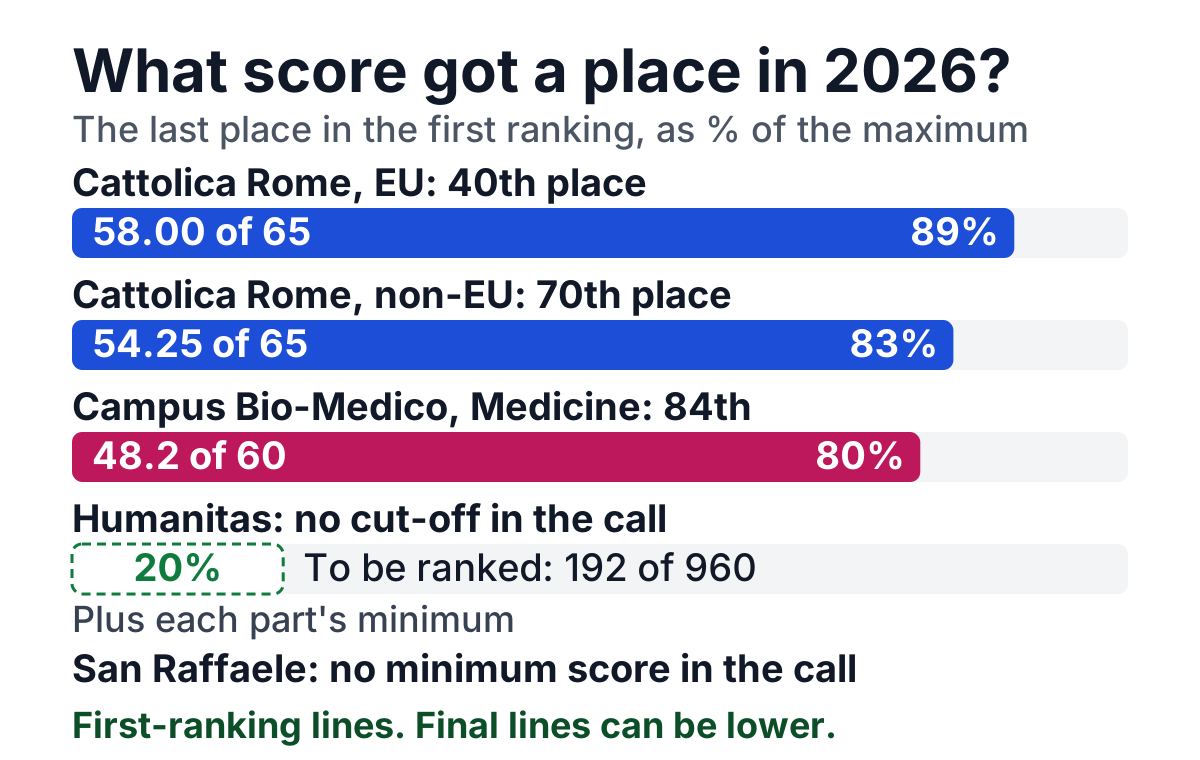
What score gets a place? The 2026 lines
The 2026 first-ranking lines, where a school published them: 58 of 65 at Cattolica Rome, 48.2 of 60 at Campus Bio-Medico. Final lines can be lower. And what the Humanitas and San Raffaele calls say instead.
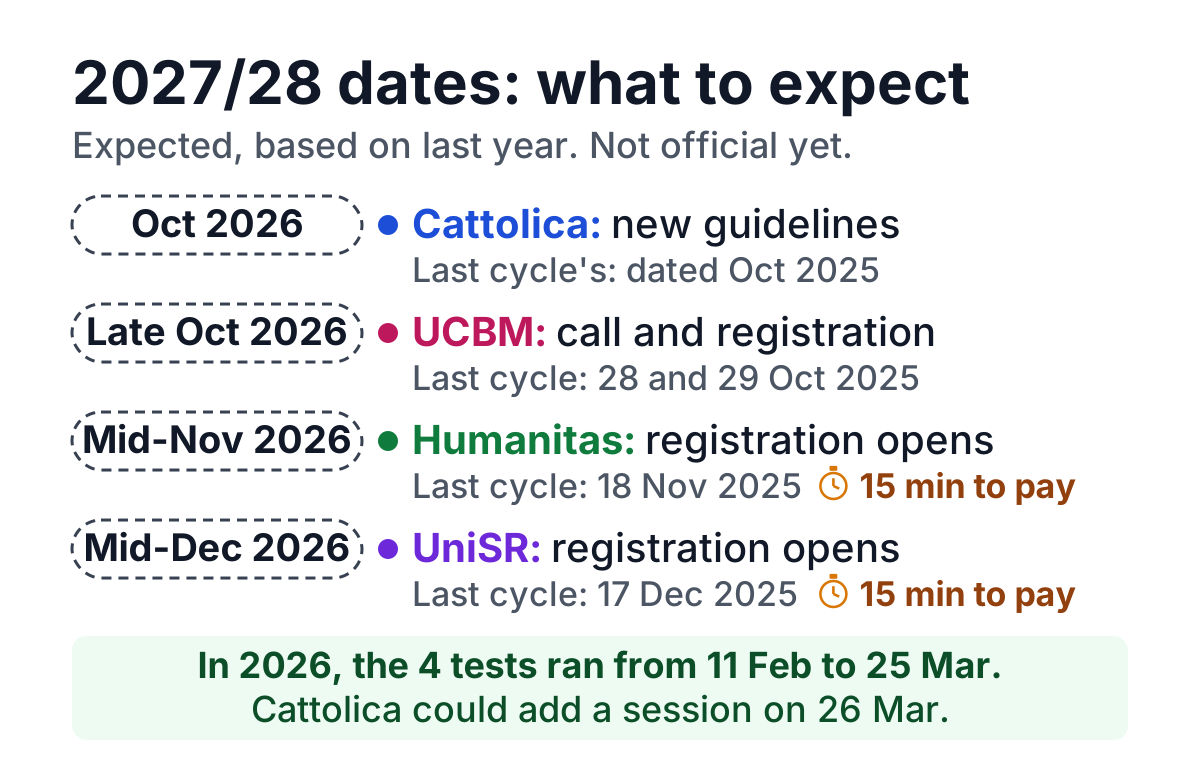
2027 test dates: what to expect
When to register, sit the test and pay at 4 private medical schools in Italy. Every 2026 date, and what to expect for 2027/28 entry.
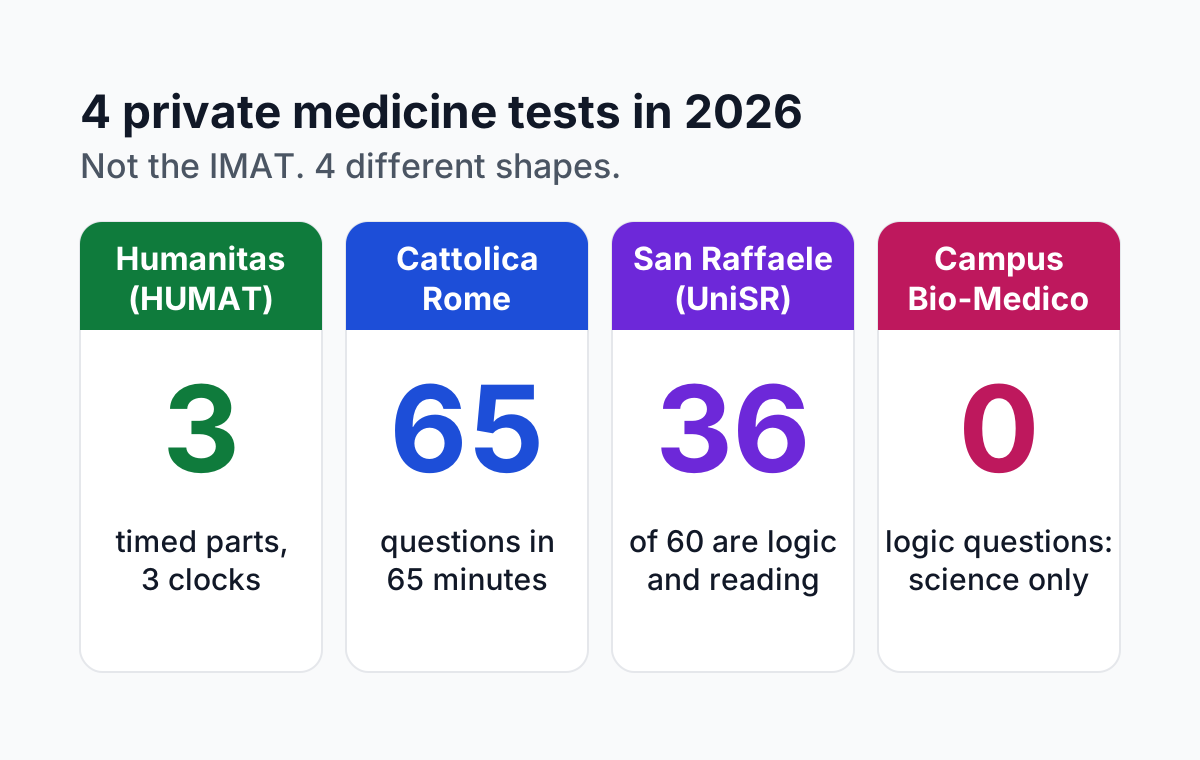
The 4 private medicine tests compared
Humanitas, Cattolica Rome, San Raffaele and Campus Bio-Medico each set their own English medicine test. Format, dates, fees, payments and deadlines, side by side.